I have finished my first set off modular terrain boards. It´s primary for 15mm, 10mm and 6mm games. But should work for 28mm also. They are designed to be light and sturdy. My base dimensions are 60x120cm / board. So three of them will create the normal 180x120cm gaming table.
Base design is 6mm MDF board supported by 28x45mm framework. This creates a strong and light design. It also creates a space on the back side of 45mm which is use to make fixed mountains and depressions to create lakes.
I might do a walk through on request. But not if no one is interested.
Here is the result:
This is my Blog about my various mostly gaming related hobbies. Here is where I brag about my conquests and try to explain that it was the dice fault that I lost. I will try to share my knowledge and sometimes even give a review or a walkthrough. And I give a warning, I have mild dyslexia and English is not my native tong so there will be faults but think of it as funny quirks.
Showing posts with label Cold war Commander. Show all posts
2014-06-24
2014-02-05
DEFCON 2! Epic Cold war Command battle
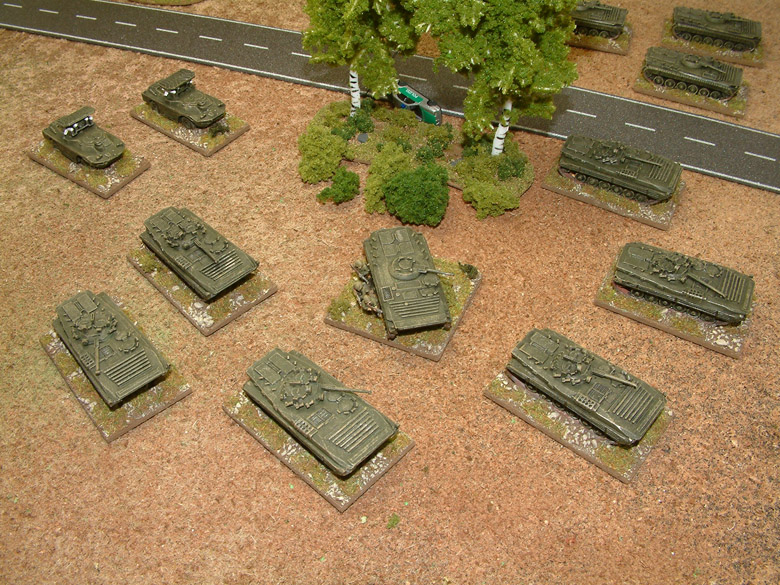
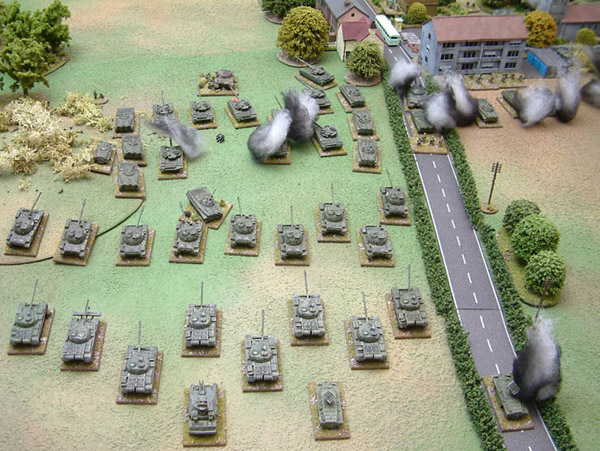
Spring 1983: Soviet union diplomats have been harder and harder pressing land control demands towards the NATO countries. Minor border clashes and commando expeditions from Soviet side have been issued to test the responsiveness of the NATO forces. NATO´s war cabinet meets and decides to act before the WARPAC is in full mobilization and launch there expected offensive.
These are the grounds for our first major battle with the Cold war Commander rules. We where 4 people per side and each controlled one battle group. The mission was Deliberate attack where NATO was the attacking force. We made list with 4000 points/group for NATO and 2000 points/group for WARPAC.
We had tree objectives on the a board of 240x180cm. Objectives where in the two villages and the airport on the furthest right seen from NATO.
2014-01-12
British 6mm Cold war finnished!
I have finished my BAOR group for Cold war Commander or some similar rules system. I am pleased with the result. It was enjoying to air brush the camouflage pattern on the tanks and various AFV´s. Also the time it took to create a complete battle group was nice. I have only taken me 1 month to be ready and the last steps have been deliberative slow.
Here is the final result:
The measurments for the bases are:
HQ & CO 30x30 mm
AFW 40x30 mm
APC, IFV and support vehicles 30x20
Infantry 20x40 mm
Inf support 20x30mm
FAO & FAC round base d20mm
Rec. hex base 20mm
So next time they will see the table is in one week. So that will be fun.
Here is the final result:
CO and HQ´s
FAC and FAO
Rec
Chieftain IV group 1
Chieftain IV group 2
FV438 Swingfire ATGW
FV432 81mm mortar carrier
FV432 APC
Carl Gustav equipped infantry
Combat engineers
Infantry
AA and 81mm mortar support
Swingfire ATGW support
GPMG support
Harrier
Lynx AH.7
The measurments for the bases are:
HQ & CO 30x30 mm
AFW 40x30 mm
APC, IFV and support vehicles 30x20
Infantry 20x40 mm
Inf support 20x30mm
FAO & FAC round base d20mm
Rec. hex base 20mm
So next time they will see the table is in one week. So that will be fun.
2013-12-31
First Cold war Commander game
Hello all and a happy new years eve to all of you few people how read my blog!
As the topic says have been playing my first game of Cold war Commander. It was the first game for both me and my opponent. Yes you guessed right there was allot of rule discussions and looking in to the rule book to find the answer. But I was surprised how little time we spent searching for rules for being the first time we played.
We played 2000 points and used no Artillery or Air assets and neither of us had any helicopters. So it was a simple mission with only ground troops. We played the encounter and used fixed formations to give a more reality feeling to the game. The missions is simple enough, we should knock out as much as possible of the opponent. I played my Brits of the Rhine and they encountered a Soviet Marin division. We both had a mix of tanks and infantry and nearly no support. The Soviet marines are elite infantry so I had to watch out for them in a close assault.
The game starts with a moving battle which means that you place your HQ and CO at your table edge and role a command role to get that HQ formation on the table. This is when we realised that it is crucial to be able to role below 9 if you are a soviet player. My opponent where not that lucky with his commander for the marines formation I think he passed 2 roles of roughly 13 roles during the game. So when his major portion of his force did not arrive was it a pitched battle and I could concentration my force on his light tanks.Here is a some pictures I took during the game.
Second turn and the British Chieftain tanks position them self to counter the Soviet light tanks that are advancing towards the British infantry that have take a position in the village.
The soviet marines finally arrives and advance towards the village. They are already late to the battle so they try to make the most of it. The Chieftain tanks are trying to stop the Light tanks to reinforce the Marines.
We called the game of when the last threat to wards the Chieftain tanks was eliminated and the commander of the struggled to get them moving. The result was a major victory to the Brit.
So to summarize the feeling of this rules. I like the system it is fast but you still feel that there is plenty of complexity to Cold war Commander. We never got to a close assault so I had no time to try these part of the rules. But they seam to be pretty streamlined we did a small test before the game sins assaults tends to the be weak point and hardest part in most rules systems. There where a few question regarding the assault but I think we ironed them out.
We also tried the Helicopter attack and realised that they are power full. But when I read the FAQ afterwords did we used the ATGW attack wrong. According to the FAQ "ATGW fired from helicopters can only target a single unit in the fire-zone and they do not double their attacks when doing so." That we did it wrong is not surprisingly because the rules clearly states that you should follow the Air strike rules which makes the doubling possible.
So there are a few issues with the rules and how they are written. But most of it can you reason out and try to get the intention of the rule not the exact wording. I think when we have played a few times will it be more clear.
As the topic says have been playing my first game of Cold war Commander. It was the first game for both me and my opponent. Yes you guessed right there was allot of rule discussions and looking in to the rule book to find the answer. But I was surprised how little time we spent searching for rules for being the first time we played.
We played 2000 points and used no Artillery or Air assets and neither of us had any helicopters. So it was a simple mission with only ground troops. We played the encounter and used fixed formations to give a more reality feeling to the game. The missions is simple enough, we should knock out as much as possible of the opponent. I played my Brits of the Rhine and they encountered a Soviet Marin division. We both had a mix of tanks and infantry and nearly no support. The Soviet marines are elite infantry so I had to watch out for them in a close assault.
The game starts with a moving battle which means that you place your HQ and CO at your table edge and role a command role to get that HQ formation on the table. This is when we realised that it is crucial to be able to role below 9 if you are a soviet player. My opponent where not that lucky with his commander for the marines formation I think he passed 2 roles of roughly 13 roles during the game. So when his major portion of his force did not arrive was it a pitched battle and I could concentration my force on his light tanks.Here is a some pictures I took during the game.
Second turn and the British Chieftain tanks position them self to counter the Soviet light tanks that are advancing towards the British infantry that have take a position in the village.
The soviet marines finally arrives and advance towards the village. They are already late to the battle so they try to make the most of it. The Chieftain tanks are trying to stop the Light tanks to reinforce the Marines.
We called the game of when the last threat to wards the Chieftain tanks was eliminated and the commander of the struggled to get them moving. The result was a major victory to the Brit.
So to summarize the feeling of this rules. I like the system it is fast but you still feel that there is plenty of complexity to Cold war Commander. We never got to a close assault so I had no time to try these part of the rules. But they seam to be pretty streamlined we did a small test before the game sins assaults tends to the be weak point and hardest part in most rules systems. There where a few question regarding the assault but I think we ironed them out.
We also tried the Helicopter attack and realised that they are power full. But when I read the FAQ afterwords did we used the ATGW attack wrong. According to the FAQ "ATGW fired from helicopters can only target a single unit in the fire-zone and they do not double their attacks when doing so." That we did it wrong is not surprisingly because the rules clearly states that you should follow the Air strike rules which makes the doubling possible.
So there are a few issues with the rules and how they are written. But most of it can you reason out and try to get the intention of the rule not the exact wording. I think when we have played a few times will it be more clear.
2013-12-17
British 6mm cold war continues
I have started the painting on my BAOR force. Because it's 6mm did I base all my models first. I needed some thing to hold on to when i start the compress dig out my airbrush. I used pre tinted pumice as basing material and used it to glue models at same time (I had re glue all the infantry models they had to small base for the pumice to be effective as glue).
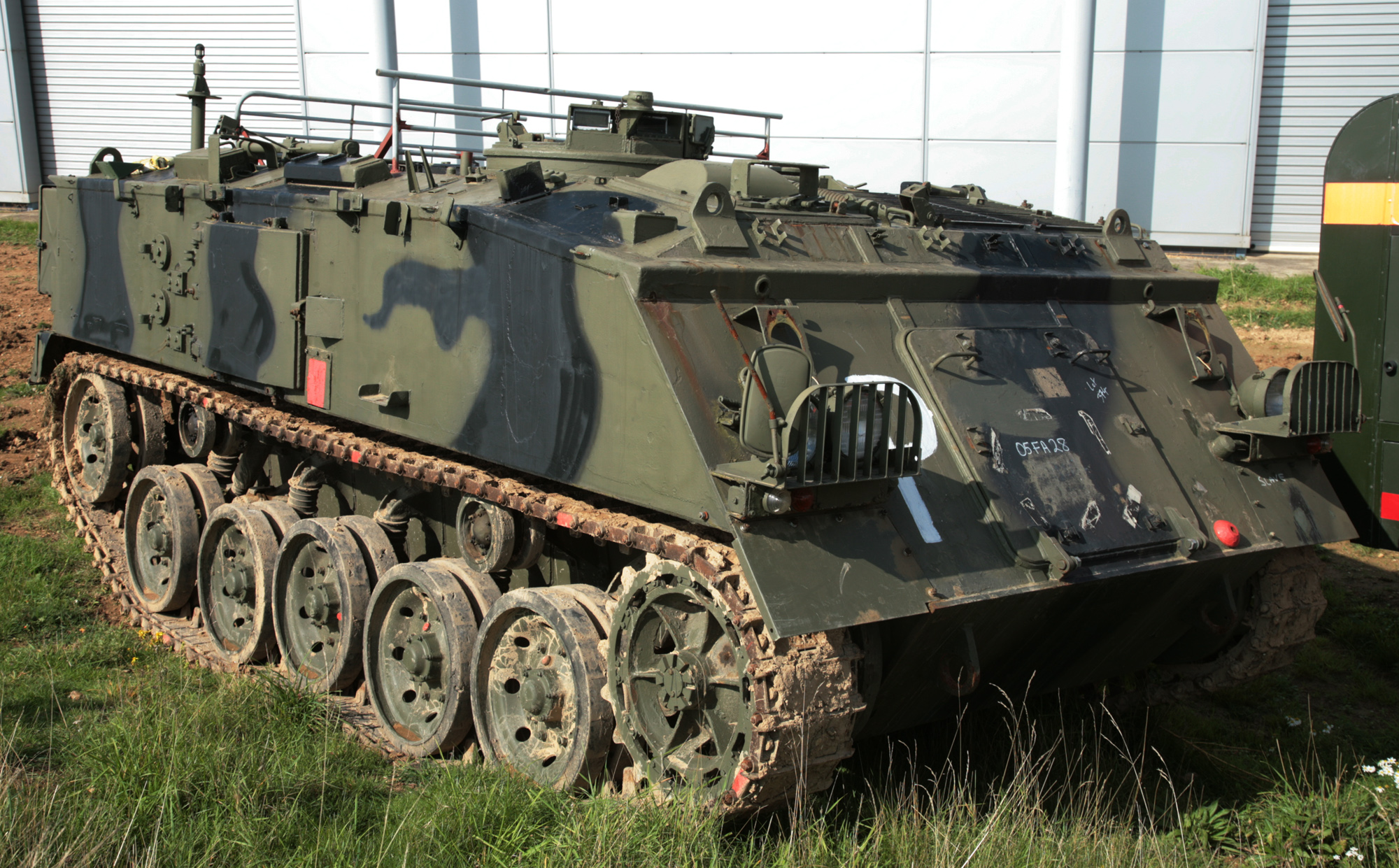
My reference (pic. above) for my painting is the camouflage pattern that was used in Europe in the 60-90. Its s green base with dark grey patterns in lines from side to side. The colour choice is a bit of experiment for me. To find a good contrast on these small miniatures and the same time have a realistic look. So I will use a lighter colour than in real life. I also take in account the darkening when I apply the wash in later painting stages.
Base colour: I use colours from AK interactive Olive drab colour modulation set. Light green base (AK 135) plus highlight dusting with Olive draw shine (AK 137).
Masking: Masked the area with blue tak
Camouflage: I use Tamiya acrylic paint Nato black (XF-69) 60/40 with Dark sea grey (XF-54) as base and a high light dusting with Dark seay grey (XF-54). I think the grey is a bit to light so I will make it darker next time, this was my first three vehicles of around 25.
Next step is to complete the remaining vehicles and shade them and then start painting all the small infantry models.
2013-12-13
British 6 mm Cold war models
As you might understand am I diving in to the cold war era. And this time are the local gaming group decided on 6 mm models to get shooting distance more correct and we are able to simulate lager battles. We are starting with a hypothetical scenario 1982-84 cold war outbreak in the European theatre.
So I will make the BAOR (British armed forces of the Rhine) base on 1982. There is a little hard to get information but I think I got some clue how the organisation is working. It will be a armoured battle group with mechanized infantry support and some air support. We are aiming to build 3000 points list for Cold war commander (review) which is rather big but I think it will give a good game with combined arms.
I got my models yesterday and started go through the models and base sizes and try to get order in the chaos. I will use these measurements for the different bases (LxW):
HQ & CO 30x30 mm
AFW 40x30 mm
APC, IFV and support vehicles 30x20
Infantry 20x40 mm
Inf support 20x30mm
FAO & FAC round base d20mm
Rec. hex base 20mm
These measurments looks good and there is plenty of space on the bases. Next step if to put down the pumice and start air brushing. Updateds will come later.
So I will make the BAOR (British armed forces of the Rhine) base on 1982. There is a little hard to get information but I think I got some clue how the organisation is working. It will be a armoured battle group with mechanized infantry support and some air support. We are aiming to build 3000 points list for Cold war commander (review) which is rather big but I think it will give a good game with combined arms.
I got my models yesterday and started go through the models and base sizes and try to get order in the chaos. I will use these measurements for the different bases (LxW):
HQ & CO 30x30 mm
AFW 40x30 mm
APC, IFV and support vehicles 30x20
Infantry 20x40 mm
Inf support 20x30mm
FAO & FAC round base d20mm
Rec. hex base 20mm
These measurments looks good and there is plenty of space on the bases. Next step if to put down the pumice and start air brushing. Updateds will come later.
2013-12-10
Cold war Commander rules review
We are a group of historical games in Gothenburg that have grown a bit tiered of Flames of War and want to try an interesting what if scenario during the cold war. We also wanted to try a different scale and zoom out more to get the divisional level of gaming. Some one in the group heard about Cold war Commander rules that are a streamlined historical rules set that is built for combined arms that is suitable for 6-10mm models. So I picked up the PDF rules from Specialist Military Publishing and read the trough.
First you realise that this is a much smaller production compared to Battle fronts games. This is not a bad thing in my opinion the rules from minor publicist tends to be more worked through and have less errors. The book is about 140 pages where more than half is different army list for different conflicts after 1946 to modern times. Of the remaining 70 pages are 40 pages rules including long examples with full colour pictures that explain the different rules and game play.
The first thing that you find when opening the book is a very comprehensive index which will help when trying to find specific rules. This I really like there is more frustrating thing than when you now that there is a rule some where but you can not find it. After that do the book continue with the basics and the go through the sequence of play. Cold war Commander is a I go you go system. One commander do a full turn and then is its the opponents turn to respond. The turn is divided in to four segments:
First segment is the scheduled phase, here is where pre-scheduled support will be used. This is air-support or off-board artillery. These support is possible in various scenarios and you have to buy them in the rooster. Before you start your first turn will you designate which turn and towards what target your support will come. This is a very neat way to handle preliminary bombardments and air strikes before or during an assault. I like the idea that the commander plan his operation before it´s started and have pointed out specific targets.
Second segment in the turn is the initiative phase. This phase can soldiers and tanks react on the enemy with out any order from the commander. Depending on the doctrine the country has for it´s army is this reaction distance different. Guerrillas are more flexible and can react if the enemy come with in 30cm compared to Soviet more rigid command structure with little initiative from the commander can they only react if the enemy is with in 10cm. During this initiative phase can you shoot and assault if possible.
Third segment and the main segment is the command phase. Here is where you will issue orders (move, shoot and assault) with you HQ and CO to the various formations and units on the battle field. Here is where this game really shines in my opinion. To issue a order do you need to pass a order test. To pass the test do you need to roll two D6 dices and get lower than you HQ or CO command value. Normal stats for Nato HQ 9 and CO 10 compared to Soviet HQ 8 and CO 9. You can continue give orders with your commander but your command value will be lower -1 every time you give an order to the same formation/unit. So it will get harder and hard to give orders to the same unit. When you HQ miss a command role will he be spent and you continue with your next HQ. Also the distance to your unit/formation is relevant so you will not spread out your troops to much because then will it be harder to give orders to your units.
You are allowed to give orders twice or more to your units but only with the same HQ or CO. So there is a limit of how may times a unit can act but it depends on luck and commander value.
Also during the command phase can you call in air support and artillery support with designated teams FAO/FAC. It is the same procedure here. You have to pass a command test for the FAO/FAC to get support and then designate a visible target for your support.
And the last thing that happens is that your command units move.
Fourth segment is the end phase where you check for victory conditions and remove hit markers.
These are the essential steps of the game. It is rather basic for being combined arms and I think the game will have a nice flow. The orders/actions is; Moving simple as it sounds move up to the move distance for the unit. There is terrain restrictions which is similar to order games. Shooting order is resolved with formation/unit designate target/targets for each unit and role the amount of dice according to the there stats. You will hit your target on 4+ if it´s in the open and 5 - 6+ if the target is in cover of some sort. You count the hits and if the target have a save value will it role saves for each hit. Mark the unsaved hits if it´s below the units hit points. Then role all the unsaved hits again and if they are equal or more than the score needed to be hit will the unit be suppressed and if its suppressed will it retreat x-cm where the x is the amount of successful suppress roles. This sound harder than it is. I think the idea that the designer is after is that you will suppress units and push them of important ground. And it is not easy to kill a tank unit if you don´t concentrate your fire.
There is allot more to the rules than describe above. The artillery support and how it interacts with the game and the Air units and Helicopters. There is also rules how to handle helicopter airborne attacks and beach assaults. And off course are there rules how to handle field defences and removal of them.
So my verdict: I like the rules and the book. It is very compact and not much text that will mislead you and interpret the rules wrong. There is some questions marks from my first read but I think it will be sorted out when we play a few times. I like the command system and I think it will make the turn exciting when you try to do the last thing in the turn to win but you fail your command role and your units are standing in the open and are eaten up the next turn. So there will be some intense roles the good thing is that the command roles are done with 2D6 which makes it more predictable. The only real issue is the poor quality of the pictures and examples of play. There could also be some more pictures or guide for the different armies in the back. I had to make allot of research on the net to figure out how the BAOR (British army of the Rhine) was build during the cold war. But you can not expect every thing from a book that cost me 12£ + 8€ for printing and spiral bounding.
I am looking forward to get a game on and try these rules with my friends. I am getting my tine British men these Friday. We have opted to use 6mm figures because that is what the rules are built for. And I will build the Brittish BAOR force that will stand ground against the WARPAC. I will keep you informed about my first game and my painting progress of there smal men. I have only painted Epic before in this scale and that was ages ago.
First you realise that this is a much smaller production compared to Battle fronts games. This is not a bad thing in my opinion the rules from minor publicist tends to be more worked through and have less errors. The book is about 140 pages where more than half is different army list for different conflicts after 1946 to modern times. Of the remaining 70 pages are 40 pages rules including long examples with full colour pictures that explain the different rules and game play.
The first thing that you find when opening the book is a very comprehensive index which will help when trying to find specific rules. This I really like there is more frustrating thing than when you now that there is a rule some where but you can not find it. After that do the book continue with the basics and the go through the sequence of play. Cold war Commander is a I go you go system. One commander do a full turn and then is its the opponents turn to respond. The turn is divided in to four segments:
First segment is the scheduled phase, here is where pre-scheduled support will be used. This is air-support or off-board artillery. These support is possible in various scenarios and you have to buy them in the rooster. Before you start your first turn will you designate which turn and towards what target your support will come. This is a very neat way to handle preliminary bombardments and air strikes before or during an assault. I like the idea that the commander plan his operation before it´s started and have pointed out specific targets.
Second segment in the turn is the initiative phase. This phase can soldiers and tanks react on the enemy with out any order from the commander. Depending on the doctrine the country has for it´s army is this reaction distance different. Guerrillas are more flexible and can react if the enemy come with in 30cm compared to Soviet more rigid command structure with little initiative from the commander can they only react if the enemy is with in 10cm. During this initiative phase can you shoot and assault if possible.
Third segment and the main segment is the command phase. Here is where you will issue orders (move, shoot and assault) with you HQ and CO to the various formations and units on the battle field. Here is where this game really shines in my opinion. To issue a order do you need to pass a order test. To pass the test do you need to roll two D6 dices and get lower than you HQ or CO command value. Normal stats for Nato HQ 9 and CO 10 compared to Soviet HQ 8 and CO 9. You can continue give orders with your commander but your command value will be lower -1 every time you give an order to the same formation/unit. So it will get harder and hard to give orders to the same unit. When you HQ miss a command role will he be spent and you continue with your next HQ. Also the distance to your unit/formation is relevant so you will not spread out your troops to much because then will it be harder to give orders to your units.
You are allowed to give orders twice or more to your units but only with the same HQ or CO. So there is a limit of how may times a unit can act but it depends on luck and commander value.
Also during the command phase can you call in air support and artillery support with designated teams FAO/FAC. It is the same procedure here. You have to pass a command test for the FAO/FAC to get support and then designate a visible target for your support.
And the last thing that happens is that your command units move.
Fourth segment is the end phase where you check for victory conditions and remove hit markers.
These are the essential steps of the game. It is rather basic for being combined arms and I think the game will have a nice flow. The orders/actions is; Moving simple as it sounds move up to the move distance for the unit. There is terrain restrictions which is similar to order games. Shooting order is resolved with formation/unit designate target/targets for each unit and role the amount of dice according to the there stats. You will hit your target on 4+ if it´s in the open and 5 - 6+ if the target is in cover of some sort. You count the hits and if the target have a save value will it role saves for each hit. Mark the unsaved hits if it´s below the units hit points. Then role all the unsaved hits again and if they are equal or more than the score needed to be hit will the unit be suppressed and if its suppressed will it retreat x-cm where the x is the amount of successful suppress roles. This sound harder than it is. I think the idea that the designer is after is that you will suppress units and push them of important ground. And it is not easy to kill a tank unit if you don´t concentrate your fire.
There is allot more to the rules than describe above. The artillery support and how it interacts with the game and the Air units and Helicopters. There is also rules how to handle helicopter airborne attacks and beach assaults. And off course are there rules how to handle field defences and removal of them.
So my verdict: I like the rules and the book. It is very compact and not much text that will mislead you and interpret the rules wrong. There is some questions marks from my first read but I think it will be sorted out when we play a few times. I like the command system and I think it will make the turn exciting when you try to do the last thing in the turn to win but you fail your command role and your units are standing in the open and are eaten up the next turn. So there will be some intense roles the good thing is that the command roles are done with 2D6 which makes it more predictable. The only real issue is the poor quality of the pictures and examples of play. There could also be some more pictures or guide for the different armies in the back. I had to make allot of research on the net to figure out how the BAOR (British army of the Rhine) was build during the cold war. But you can not expect every thing from a book that cost me 12£ + 8€ for printing and spiral bounding.
I am looking forward to get a game on and try these rules with my friends. I am getting my tine British men these Friday. We have opted to use 6mm figures because that is what the rules are built for. And I will build the Brittish BAOR force that will stand ground against the WARPAC. I will keep you informed about my first game and my painting progress of there smal men. I have only painted Epic before in this scale and that was ages ago.
Subscribe to:
Posts (Atom)